Our body is made up of multiple interdependent systems and each one of them requires some specific elements for proper functioning. These elements are provided majorly by our nutrition, some by the environment and some through indigenous manufacturing within our body itself.
So, what we eat matters.
How to gain / lose weight?
How to lose belly fat in weeks?
What diet is good for the heart?
All these answers flood the internet , so, I won’t be discussing all these.
As a surgeon two things matter to me and I am sure to those who have critically ill or chronically ill patients at home.
First, what do we need in our diet?
Second, all those who are not able to eat due to various ailments, how can we provide nutrition to them.
What do we need?
How much?
If we consider an average built adult male , he should require around 2600 cal./day – going up to 3000 cal./day with moderate work. For females it should be 2000 cal./day, up to 2500 cal with moderate work.
Who requires more?
Heavy physical activities, sports, exercise and labour demand more calories.
After any major surgery, burns, major trauma.
Serious ailments like TB, malignancy.
Fat soluble vitamins:
A, D, E, K.
Are they enough? What else do we need? And why do we need them?
Yes, we do. They are essential minerals.
Let’s see why we need them.
Are there some advantages of a non-vegetarian diet?
Yes, a few
Any advantages of a vegetarian diet?
Yes, of course
What is Metabolism?
Metabolism is the sum total of all the physical and chemical changes taking place within the body. How food is transformed to energy, how enzymes and hormones are formed, muscle and bone growth and also the destruction of them with age or disease.
It mainly consists of Anabolism (Constructive) and Catabolism (Destructive). Balance between these two is the fundamental essential.
When does catabolism increase?
It is when the body needs more energy and if they don’t get adequate, they extract it by converting muscle proteins into glucose resulting in rapid weight loss.
A lot is discussed about FIBRES in diet. What do they do? Why should we include adequate fibre in our diet?
What about Smoking and consuming Alcohol?
Better to avoid than REGRET.
When should I consider myself obese?
Calculate BMI : Body Mass Index
Weight in Kg / (height in metres)2 :
What can happen if I am obese?
So, should I stop eating fat in my diet?
No, lipids are required.
Why do we need proteins?
So, our diet should contain protein, preferably in every meal.
Can menopause cause calcium deficiency?
Yes, due to deficiency of Estrogen. Women after 40 and especially after menopause must keep very strict vigilance about calcium and Vitamin D intake.
Calcium rich foods :
Vitamin D rich foods:
What food is good for our hearts?
I am Diabetic, what should I include in my diet?
What should I avoid if I am Diabetic?
Diabetes can lead a life without any complications and implications.
What cooking oil should be used?
Well, that depends on our food habits. But, some good cooking oils are;
Should we not use Ghee?
No, we should. Ghee (cow ghee) is one of the best cooking mediums. It helps in digestion, brain function and weight loss. Ghee should be incorporated in the cooking medium along with mustard and refined oils.
What oils should we avoid?
All with omega 6 content;
Now,
The surgical aspect. What can we do for patients with high catabolism, if they are not able to eat due to whatever health condition.
One is Enteral feed. It is delivering nutrition to the gastro-intestinal tract. It is most physiological and has maximum positive effects.
How can we provide Enteral feeds?
Mouth, by directly feeding if the patient is conscious.
If not, by a Ryle’s tube through the nose. It goes up to the stomach and liquid food can be given only. A major disadvantage is patient compliance if conscious and also higher risk of aspiration. It is good for short term feeding after surgery or stroke.
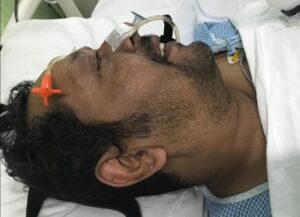
N.J Feed. It is a Naso-jejunal feed. Under endoscopic guidance a tube is passed up to the jejunum (small intestine) and another lumen stays back in the stomach. It is good for longer term with definitely lesser risk of aspiration particularly preferred in patients who have undergone stomach surgeries.
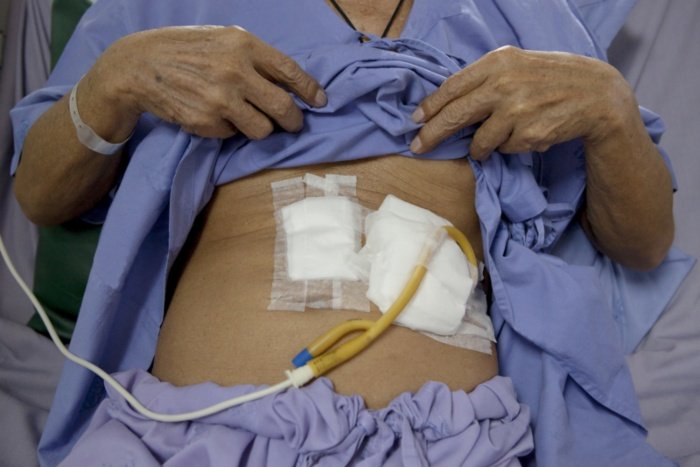
F.J. Feeding Jejunostomy. It is a simple surgery where a wide bore tube is inserted in the small intestine. Liquid and semisolid food can be administered. Only negative point is, it can be blocked and needs careful usage. It is very good for terminally ill, stroke and trauma patients and also those who have undergone major abdominal surgery.
PEG, Percutaneous Endoscopic Gastrostomy. Most recent, extremely effective, short uncomplicated procedure. Very very useful in chronically ill patients. Most physiological. No nutrients deficiency occurs and also a semi-solid diet can be administered.
In Spite of all these modalities, sometimes it becomes necessary to give nutrition directly into the veins. It is called TPN : Total Parenteral Nutrition. Yes, there are some disadvantages like hepatic and rectal dysfunction, malabsorptions, nutrient deficiencies. But it is a great modality to administer calories and nutrition in extreme crisis situations.
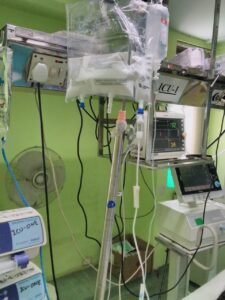
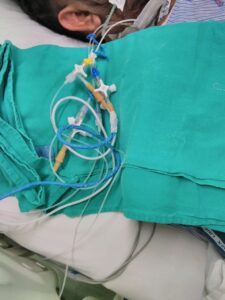
KNOW about them;
If you have a chronically ill, stroke or malignancy patient at home; consult with your doctor and give utmost importance to deliver nutrition to replenish their needs.